Built for team managers & football operations
When a player drops out on Thursday, what else breaks?
The room he was sharing. The seat on the flight. The coach manifest, the meal count, the accreditation, the kit numbers, and the itinerary that already went out to thirty-two people.
Not another place to enter data. Squadweek connects the operational consequences when something changes.
One change. Every consequence tracked.
Mark a player out, and Squadweek shows every booking, count and document affected — updating what it safely can and flagging anything that needs your approval.
- 1Player drops out
- 2Connected changes appear
- 3Every consequence tracked
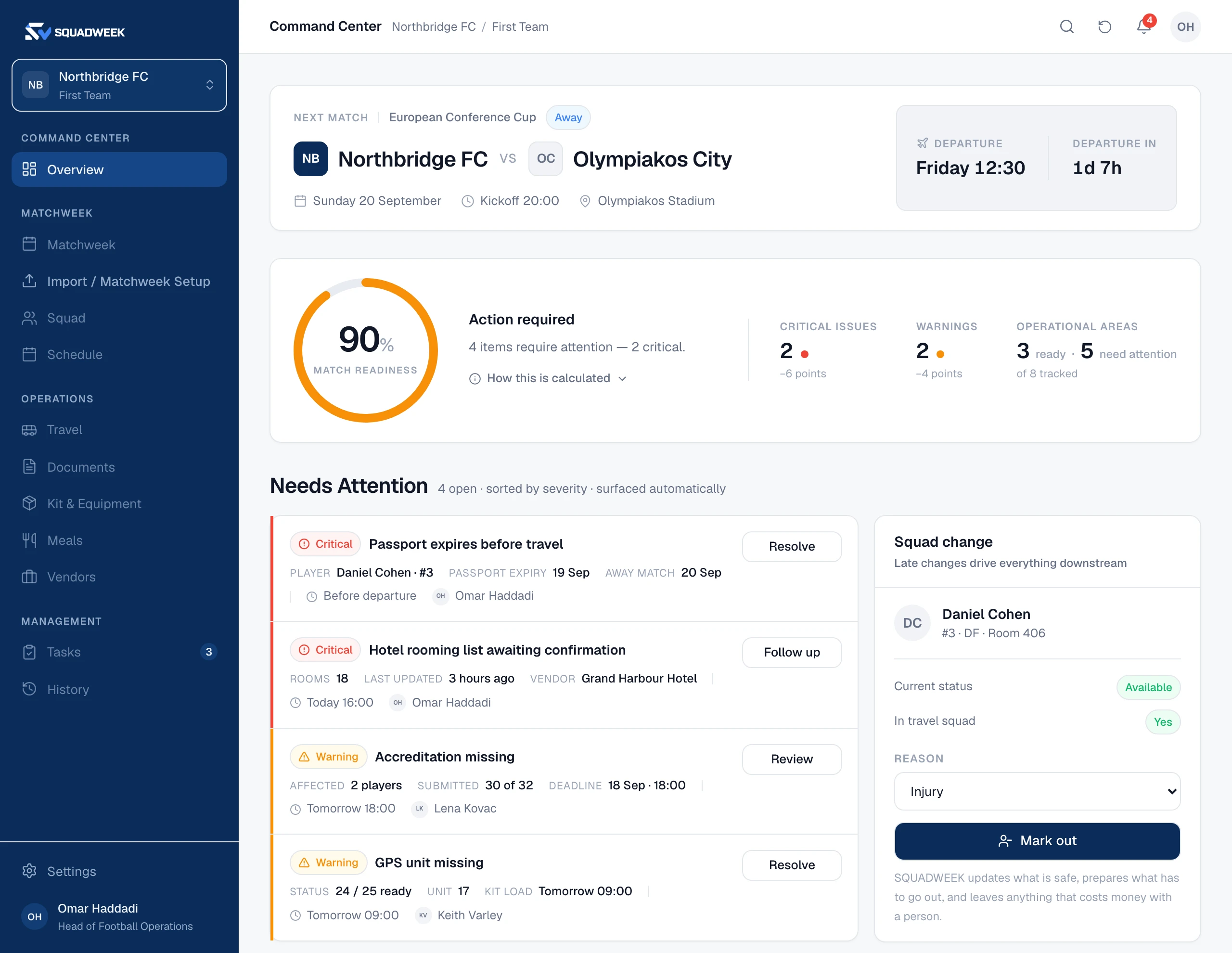
The rest of the week, on one screen.
Readiness for the fixture, the exceptions dragging it down, and the operational areas they sit in — with the squad change that starts the sequence above sitting on the right of the same screen.
- Squad changes
- Who travels, who doesn't, and what changes with them.
- Travel & rooming
- Flights, coaches, rooms and manifests stay aligned.
- Documents & accreditation
- Know what expires, what's missing and what blocks the trip.
- External confirmations
- Hotels and suppliers confirm without needing another account.
Where this is right now
Squadweek is being built now, ahead of its first release. It is being shaped around one question — how matchweek actually runs inside a club — and that is what we are asking Team Managers and Football Operations staff across Europe.
One principle is already fixed: players, hotels and other external parties shouldn’t need another account. They interact through secure links and messages while the operations team stays in control inside Squadweek.
Who is behind it
Ofir Talbi
Founder, Squadweek
We’re building Squadweek around one question: when something changes inside a first team, can every operational consequence stay in sync without someone having to remember it manually?